
Two cancer diagnoses before 30, more than a dozen surgeries and the loss of most of his bowel could have broken Hugo Toovey. Instead, it gave him something to say. The Australian Army Major reflects on resilience, life with a stoma and why sharing the messy truth matters.
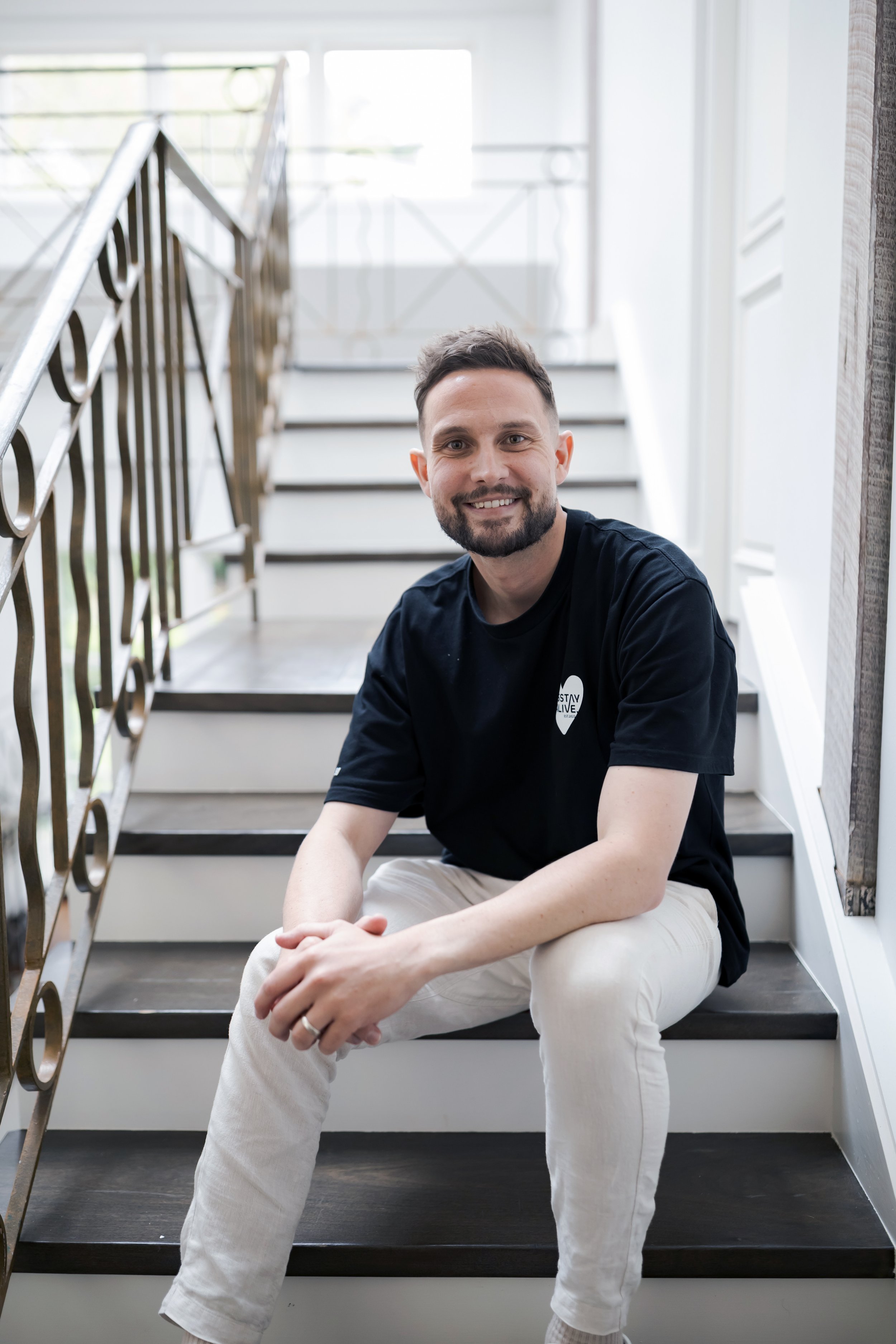
For Hugo Toovey, advocacy began with someone else’s story.
Years ago, he was listening to a podcast featuring a young melanoma advocate named Natalie Fornasier. She chatted candidly about living with advanced cancer – not with forced optimism, but with a kind of disarming honesty.
“She was so articulate,” Hugo says from his home in Sydney. “She spoke about living with stage 4 melanoma and why she wanted to share her story – and what she wanted others to learn about sun safety and looking after your skin.”
At the time, Hugo wasn’t someone who spoke openly about his own health. But Natalie changed that.
“I connected with her down the track and we became really close,” he says. “She was one of those people that really got me into sharing my story more and creating awareness.”
Natalie died in 2023, in her late 20s.
“She was an advocate right to the end,” Hugo says. “She was just so vulnerable in how she spoke, whether it was about approaching dying or living with terminal cancer. She was so candid and raw. And that was the moment I realised it’s important to be open, honest and vulnerable in how we talk about this. You don’t always have to be super inspiring or positive.”
What stayed with Hugo most wasn’t Natalie’s courage. It was her honesty. Her bucking the trend of illness narratives looking a certain way.
“You’d hear things like, ‘you’re so inspiring, mate. I don’t know how you do it.’ And that’s nice. But we all know you can’t be like that the whole time,” he says.
“If everything you share is just super positive, it’s almost unrealistic to what people are actually going through. There are so many people following along quietly who are really struggling.”
When Hugo first discovered a lump at 21, cancer was the furthest thing from his mind. At the time, Hugo was early in his military career – fit, young and newly trained.
“I just had that army stoic mentality,” he says. “I thought I was bulletproof, I was invincible.”
Hugo ignored the lump for six months until, with encouragement from his father, he saw a doctor. The diagnosis was testicular cancer. Even then, the seriousness didn’t fully sink in.
“I was just this young bloke saying, ‘yeah, I’ve got cancer, starting chemo next week,’” he says. “But when people hear the words cancer and chemotherapy, they think, holy shit.”
By the time treatment began, the cancer had spread. “I had to have chemotherapy and major surgery just because I put it off.”
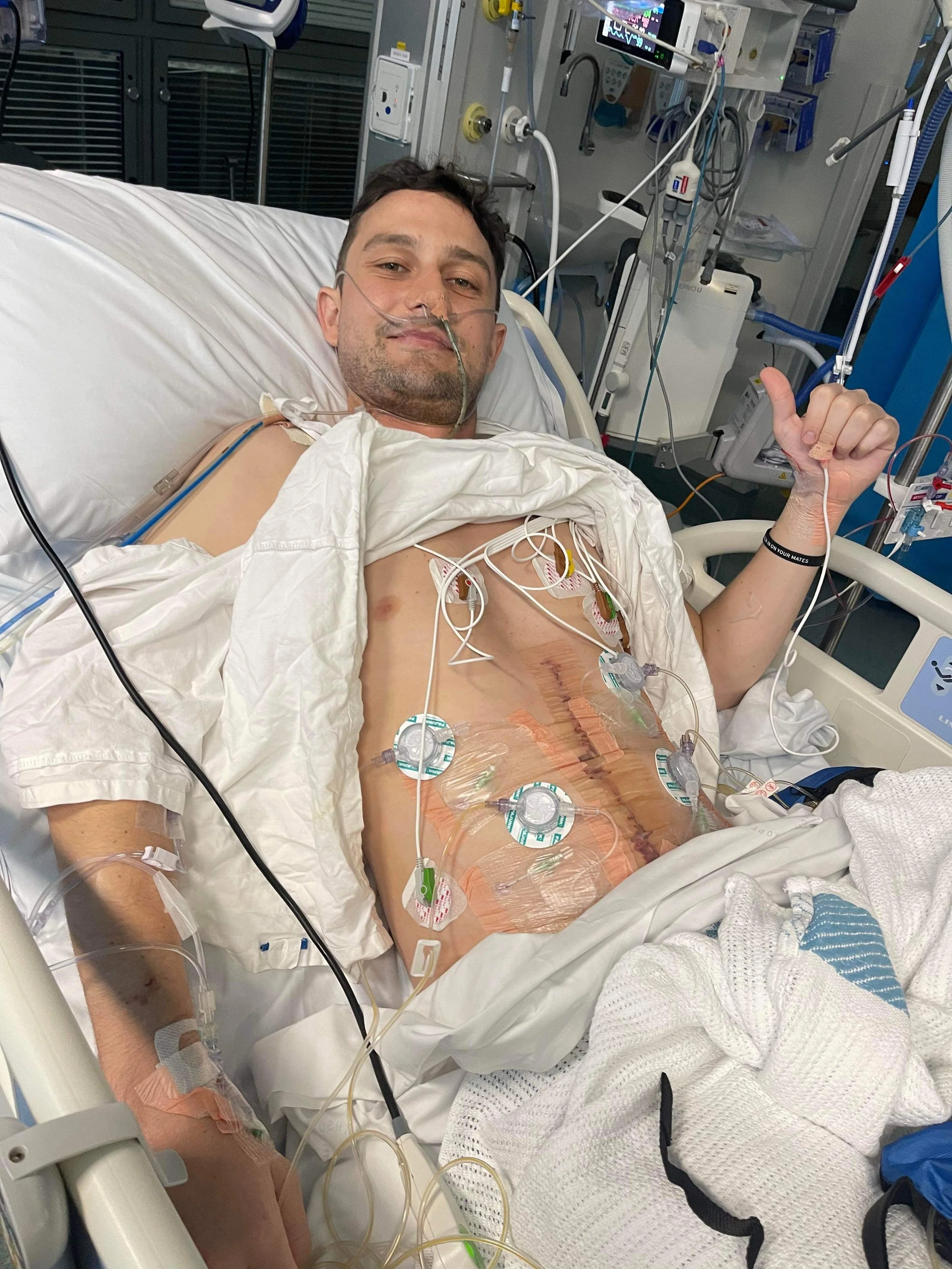
Five years later, Hugo received the all-clear. He remembers shaking his oncologist’s hand, relieved. And for a few months, he lived life as “pre-cancer Hugo”. Then his bowels started playing up.
“I’d always had an inconsistent gut, so it didn’t seem unusual,” he says. But after years of cancer vigilance, Hugo decided to get checked.
A colonoscopy revealed large polyps. The specialist called Hugo back immediately. The diagnosis: colorectal cancer.
“I remember saying to him, ‘are you sure you’ve got the right person? I’ve just had my five-year all clear’.”
This wasn’t a recurrence. It was a completely new primary cancer.
“I was genuinely confused. One moment I was back to normal. The next moment I was right back in the thick of it,” he says.
“That weight was too much for me to carry. And that’s when I got really emotional for the first time in a long time and had a proper cry… guilt, anger, all these different emotions all boiled into one and I just thought, nah, I can’t do this.”
What followed were eight years of medical intervention: major surgeries, complications, a Crohn’s disease diagnosis and repeated bowel resections. Hugo’s colon and rectum were eventually removed. Large sections of his small bowel followed. Today he has only 1.8m of bowel (the average adult bowel is 7.5m to 9m) and a permanent ileostomy.
Before his ileostomy, Hugo lived with severe bowel dysfunction and incontinence.
“Leaving the house created anxiety. I always had to know where the toilet was,” he says. “If I was at someone’s house and there was only one toilet, my anxiety would go through the roof.”
Life with a stoma has dramatically changed that. “I’ve gone to social situations now where I’ve got no anxiety. I can just empty my bag and it takes 30 seconds.” Though it’s not without its challenges – and the occasional night-time leak.
“It’s not ideal waking up covered in shit,” Hugo laughs. “But it’s significantly better than what it was.”
Years of surgeries changed Hugo’s body dramatically – something he has come to accept. Today, he doesn’t hide his scars or his stoma.
“I’ll happily go to Bondi Beach with my shirt off,” he says. “I know people will look. But I’m proud of what those scars represent. This body has endured so much. The fact I’m still here – I’m proud of that.”
Hugo has a lot to live for – his wife, Amber, and their son, Teddy. Then there’s his advocacy work, which saw him receiving the 2025 Australian Mental Health Lived Experience Prize.

In 2023, Hugo founded 25StayAlive, a charity focused on promoting testing and early detection among young adults.
“People would always say, ‘geez, you’re so young for this’,” he says – but the statistics tell a different story.
Bowel cancer is rising among young adults. Testicular cancer is a young man’s disease. Melanoma remains one of Australia’s most common cancers in younger people.
“Yet, young adults often get dismissed,” Hugo says.
His solution is simple: encourage Australians to treat 25 the way many treat 50 – as the age to start paying attention to health. “We want people to have a baseline health check at 25,” he explains. “Then every year after that.”
Hugo’s organisation runs workshops, community programs and health literacy campaigns across Australia. “We want young people to understand their bodies,” he says. “But we also want clinicians to listen to them.”
If there’s one message Hugo wants people living with bowel or bladder conditions to hear, it’s this: don’t suffer silently.
“These aren’t sexy conversations. Bowels and bladders aren’t great dinner-party topics. That’s why young people are dying of bowel cancer – because people don’t talk about it,” he says.
His advice is to start small: “Let your village in – your close friends and family. By sharing your story, you can have power over what you are going through. You can control that narrative. And most importantly, you can connect with so many other people who can say, ‘hey, I get it’. That’s a really powerful thing.”