
Brisbane’s Megan Wood spent sixteen years being told by medical professionals that her laundry list of symptoms and suffering was “normal”. Here, she tells Anja Christoffersen what she’s learned about surviving – and challenging – a system that kept failing her.
When did you first notice something wasn’t right with your bowels and bladder?
I’ve had digestive problems for as long as I can remember. As a baby I experienced severe colic, and in early childhood this progressed to ongoing constipation and epigastric (upper abdominal) pain. I didn’t have the language to explain what was happening at the time, but I clearly remember the constant stomach aches, “stitches”, and reflux-like symptoms that simply became my normal.
Things escalated significantly in my teens and early 20s when symptoms I had always lived with became much more severe. I did everything I could to seek help, but spent over a decade being dismissed, misdiagnosed and cycled through a revolving door of assumptive treatments. Along the way I encountered a great deal of medical gaslighting and misogyny – a lack of curiosity, a reluctance to investigate further and, at times, a clear absence of care from those who were meant to support me. I would present to hospital appearing heavily pregnant, when in reality my abdomen was severely distended due to extreme constipation. At other times, I would be hospitalised after days of uncontrollable diarrhoea and vomiting.
These days, I experience constipation more often than not, and it is incredibly difficult to manage, particularly as many of the contributing factors are anatomical and largely outside of my control.
My first bladder-related issue occurred when I was 16, during a severe cardiac event that resulted in a complete loss of continence. Following this, I began to notice mild bladder leakage, which gradually progressed into urgency and an inability to fully empty my bladder – something that was painful, frustrating and, again, largely dismissed.
It’s only very recently that I’ve been able to piece together a full understanding of what’s been happening. Due to my underlying condition, hypermobile Ehlers–Danlos syndrome (hEDS), my connective tissue abnormalities have led to multiple significant vascular compressions, along with associated Mast Cell Activation syndrome (MCAS).
In addition, I have multi-organ pelvic prolapse and bowel intussusception, which together create a mechanical bowel obstruction that is only visible on dynamic imaging. This explains the severe slow-transit constipation, the strain on my organs, and the cascade of secondary complications I’ve experienced.
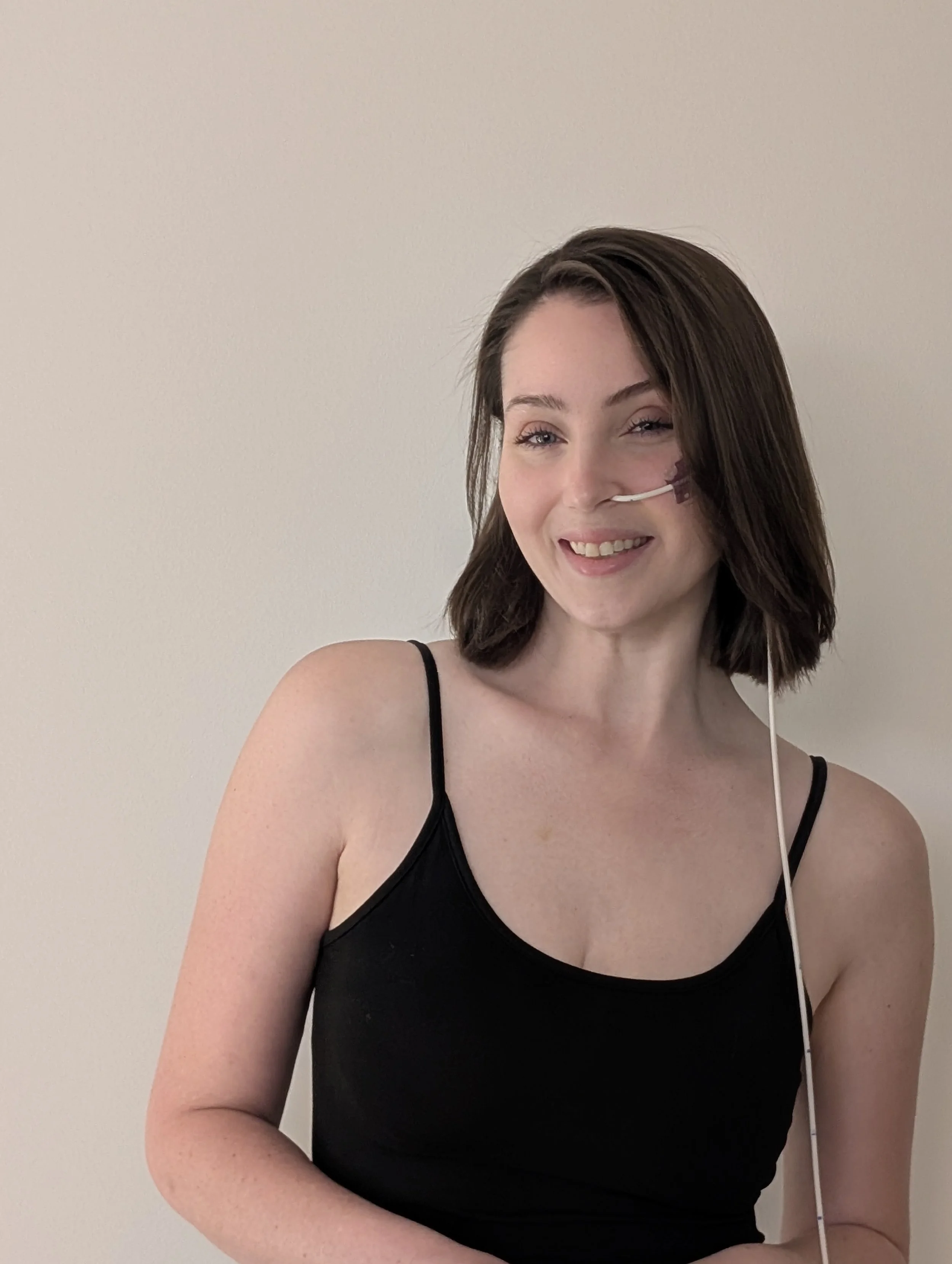
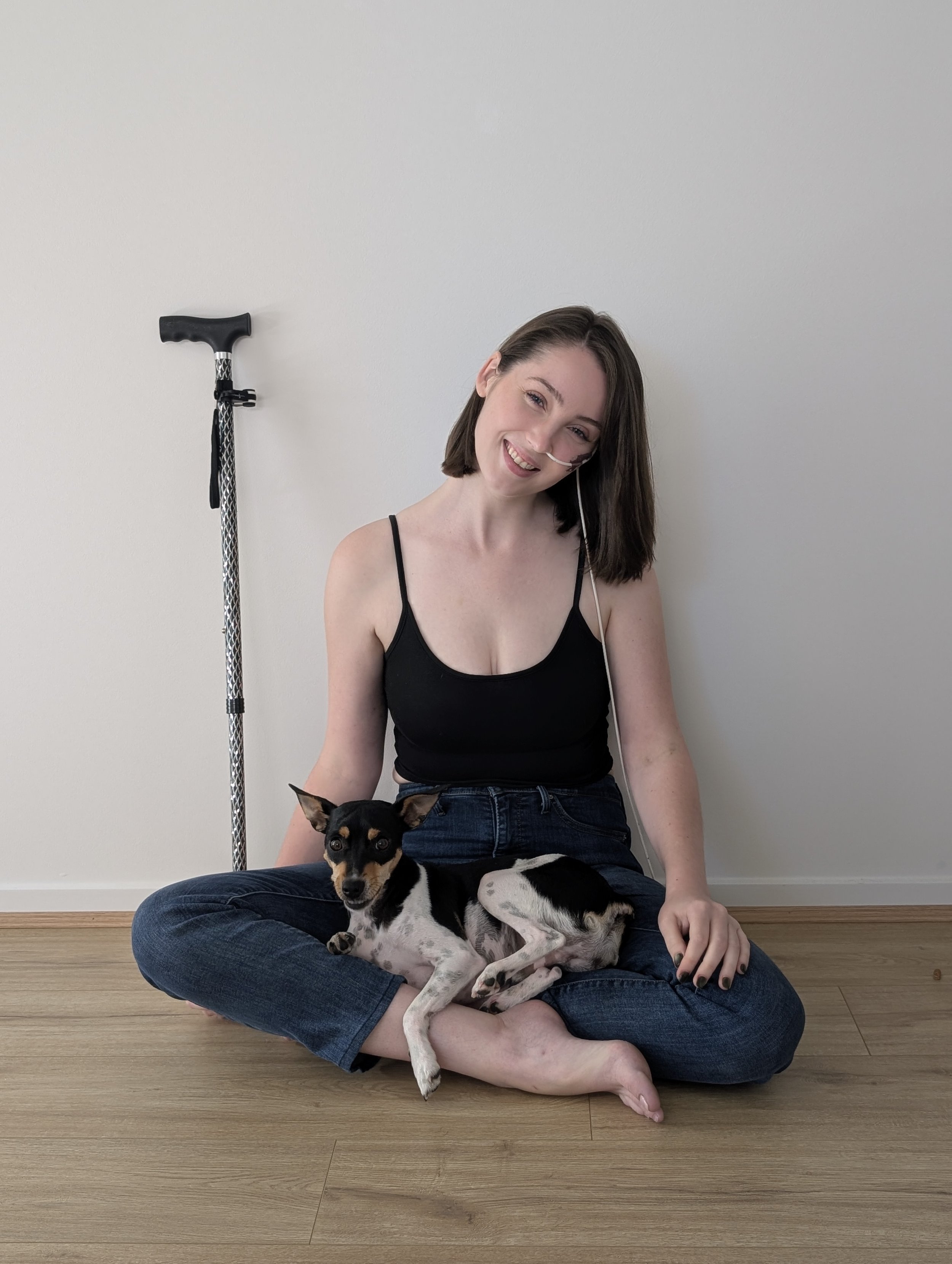
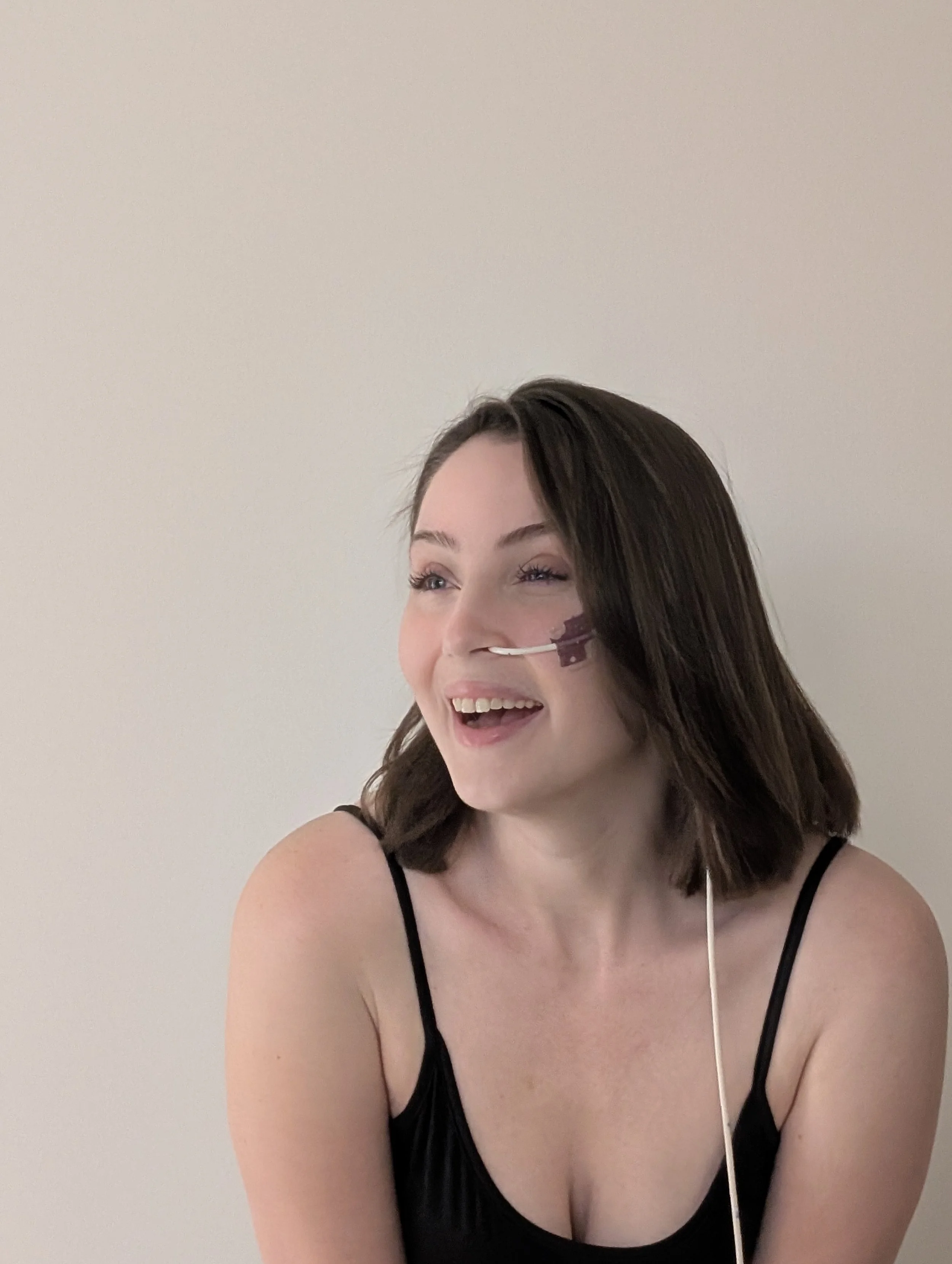
At this point, I’m unable to meet my nutritional needs orally. Eating causes pain, bloating and nausea, and my digestive system is not functioning effectively. As a result, I now rely on a nasojejunal feeding tube. My bladder and bowel issues are further complicated by endometriosis and adenomyosis – because, it seems, the list wasn’t quite long enough already.
When did you first seek help?
I first went to the doctors seriously seeking answers and support when I was about 13 or 14 years old. I cannot begin to count how many doctors and specialists I have seen, or how many hospital visits and admissions I have been through. I’m 31 this year, and only got my hEDS diagnosis confirmed formally two years ago.
Was it uncomfortable talking to your doctors about your challenges?
It definitely was in the beginning. Talking about anything to do with poo, pee, or bodily functions felt awkward and embarrassing, especially when I was younger and still desperately trying to be “polite” and not make people uncomfortable.
But honestly? After everything I’ve been through, I’m past the point of caring – I don’t give a fuck anymore. I’ve been suffering for so long and had to advocate so fiercely for myself that I’ve learned to be direct, clear and unapologetically honest about what I’m experiencing. These days, I lay everything out in plain English. If something is leaking, blocked, prolapsing, twisted or otherwise misbehaving, I say so.
I also turn up prepared. I bring peer-reviewed research, relevant information and whatever evidence might help my medical team understand what’s going on. Thankfully, the team I have now appreciates that – they actually value my involvement and that’s exactly how healthcare should be. Patients shouldn’t be passive passengers in their own bodies.
Looking back, could anything have made your experiences with medical professionals better?
In the early days, absolutely. Going into appointments prepared made a huge difference – having notes, questions, symptoms written down. And most importantly, having a support person I trusted. Someone who could speak up for me when I couldn’t, or when I froze, or when the conversation drifted off track.
These conditions come with a huge amount of medical trauma, and even when you think you’ve rehearsed the whole interaction in your head, the moment you’re triggered, it can all fall apart.
For a long time, I didn’t even realise I was being triggered. It wasn’t until my mid-20s that I started recognising the signs and was later diagnosed with complex post traumatic stress disorder (C-PTSD). I’d leave an appointment thinking things went okay and then a few days later it would hit me – wait, they talked over me the whole time. Or they never answered any of my questions. Or, why did I walk out with zero follow-up tests or treatment options after paying hundreds of dollars and spending half an hour explaining myself?
It’s actually funny in a not-funny way – I’m a strong advocate for other people, but advocating for myself has been a long, ongoing work-in-progress as a result of C-PTSD.
In your interactions with medical professionals, how was incontinence framed to you?
For most of my life, it was completely dismissed. I was repeatedly told things like: “IBS [irritable bowel syndrome] is very common, sweetheart. Bloating isn’t the end of the world. You still have a pretty face, you’ll be fine.”
That is an actual quote from a former gastro-enterologist and, for years, that was the tone: minimising, patronising and implying that what I was experiencing was either “normal” or something I just needed to tolerate. There was no real investigation, no curiosity, no validation.
Only recently has the framing shifted into something more realistic and helpful. It has now been explained to me that some aspects of my incontinence and motility issues can be managed or improved through physiotherapy and medication, while other parts may require continence aids. Surgical intervention might be also an option – with the caveat that surgery is not a guaranteed or permanent solution.
What initial investigations happened?
I’ve had pretty much every investigation under the sun. It started with routine blood tests, then moved into more specific panels as things progressed. From there it became a parade of imaging: X-rays, CTs, MRIs – honestly, I’m amazed I’m not glowing in the dark at this point.
I’ve also had specialised tests and multiple colonoscopies, sigmoidoscopies and gastroscopies. I’ve undergone two laparoscopic surgeries and now get regular pelvic floor Botox to help calm down hyperactive muscles and manage the associated pain. I recently had a celiac plexus block to assist with pain. I have had catheters inserted to empty my bladder in hospital settings on many occasions, too.
How did you determine whether your challenges were a standalone issue, or a symptom of a broader chronic condition?
Honestly, for a long time it didn’t feel connected. Everything seemed like its own isolated problem popping up at random – until the flare-ups started happening so frequently that they basically stopped being flare-ups and just became my everyday baseline. Once all the symptoms blurred together like that, it became pretty obvious that this wasn’t a bunch of separate issues, but one big interconnected mess.
Now that I have actual confirmed diagnoses, that hunch has been proven right: none of it was standalone. It was all part of the broader picture of my chronic condition. Pesky connective tissues and angry mast cells – causing chaos everywhere!
How does navigating the healthcare system impact your lifestyle and finances?
The impact on my life has been enormous. It has touched every part of who I am and how I live. I’ve lost friends, strained relationships with family who didn’t understand and even lost jobs because I didn’t yet have a diagnosis or the evidence I needed to justify absenteeism or request reasonable adjustments.
My dating life also took a hit, for years, before I met my wonderful husband. I’ve had to pause or abandon studies. Truly, pick an area of life and this has affected it in some way, shape or form.
Everything is so intertwined that there’s no clean separation between “me” and “my medical stuff”. Anyone in my inner circle has to be comfortable with the reality that sometimes I’ll need to cancel plans, or I’ll suddenly run out of stamina and have to leave early, or I’ll end up in hospital unexpectedly. That’s just the terrain.
Miraculously, I’m still working full-time – and the only reason that’s possible is because I have an incredibly supportive, understanding and flexible employer. They’ve allowed me access to disability leave, flexible arrangements and full-time work from home. I would love to move to part-time hours, but with the enormous cost of healthcare, that simply isn’t financially viable right now.
I’m in the process of applying for the NDIS [Australia’s National Disability Insurance Scheme] but, given the changes to access, I’m anxious about being rejected multiple times. I’m at a point where I desperately need support, but I can’t rely on the public system at all – I spent the better part of a decade running in circles there with no answers. My stamina is in the toilet – pun intended – and I’m really struggling to keep up.
But I’m still moving. Still scraping by. One foot in front of the other.
What medical-related interventions have you tried, and did they work?
I’ve tried a wide range of interventions over the years, with very mixed results. Various elimination diets and food restrictions offered minimal benefit. I’ve also trialled numerous laxatives and motility medications – some provided short-term relief, but none have addressed the underlying cause and their effectiveness often diminishes over time, requiring ongoing changes in approach.
I’ve also trialled different exercise routines, which largely had no impact on my symptoms, along with heat packs and TENS (transcutaneous electrical nerve stimulation) machines. These can help take the edge off pain, but they don’t address the cause. Similarly, topical gels and creams have provided only limited relief.
For continence management, I’ve relied on pads, nappies, reusable continence underwear and bed protectors when needed – practical supports, but not solutions.
More recently, I’ve found significant benefit from IV (intravenous) hydration therapy. In addition to supporting my severe postural orthostatic tachycardia syndrome (POTS) and associated hypovolaemia, it has improved overall hydration and, in turn, helped support better bowel motility.
At this point, it’s about managing the day-to-day reality as best as I can.
What options are on the table for you now?
Surgery is becoming more and more likely for me. I’ve also been advised to look into a pessary to help support my bladder due to the cystocele. Alongside that, I’ll continue with long-term supportive therapies – physiotherapy, psychology and psychiatry – all of which are helping to keep me functional.
I’m also at a point where I urgently need NDIS support to help me manage day-to-day living at home. I simply can’t keep up on my own anymore – even with the incredible help I get from my husband, family and friends when they’re available. The care burden on them is huge, and it’s not sustainable for any of us. Formal support is the next critical step if I’m going to maintain any kind of stability or quality of life.
How do you weigh up making decisions about your medical care?
When I’m facing a medical decision, I tend to hyperfocus on the issue at hand and research as much as I possibly can. My starting point is always peer-reviewed literature so I can understand the actual science, the data, and what the research shows. Then I look to support groups and people with similar lived experience to understand what the real-world outcomes look like. Lived experience often fills in the gaps left by medical papers.
There was a time when I would simply trust whatever a doctor told me. I don’t do that anymore. After years of mismanagement, dismissal and incorrect assumptions and diagnoses, I’ve learned that I need to be an active participant in my own care. Researching gives me control, helps me advocate for myself, and ensures I’m not blindsided or pushed toward decisions when I’ve only been given part of the story.
For big decisions – especially surgeries that are elective or have uncertain outcomes – I talk everything through with my husband, close friends, family and mental health professionals. I want to make sure I’m in the right headspace, fully informed, and emotionally prepared for whatever comes next.
What could have better prepared you to navigate the healthcare system?
A reality check. The knowledge that the real world is nothing like the medical dramas on TV. You don’t walk into a hospital and magically get a whole team of specialists trying to solve your case overnight. You don’t get instant answers. And nobody hands you a neat binder of “here’s what’s wrong and here’s how we’ll fix it”.
I wish I’d known how expensive, exhausting and emotionally brutal the system can be. That not every doctor will be a good fit – or even particularly informed – and that some genuinely cannot help you, no matter how nicely you ask. That some things don’t have cures. That miracle solutions advertised by alternative therapy providers are, more often than not, just expensive snake oil aimed at desperate people.
I wish I’d understood earlier that the public system isn’t just “under strain” – it’s fundamentally broken in a lot of ways. Sometimes you get lucky, but often you’re only seen at surface level unless you happen to land with a specialist team that has the time, capacity and curiosity to look deeper. And private healthcare is often the only route to get taken seriously or even properly investigated.
I wish someone had told me to request and keep copies of everything – every scan, every blood test, every letter and report. To insist that doctors document in my file when they refuse investigations I’ve asked for, so there’s a record of it. To keep my own detailed notes or ask to take recordings, so I’m not relying on memory when I’m overwhelmed or unwell.
I wish someone had prepared me for the fact that I won’t always have an advocate with me in healthcare settings. That medical misogyny is alive and well. That I would be told “no” a million times. But if my body is screaming that something is wrong, I’m allowed – and entitled – to keep pushing.
ADDENDUM
Since this interview, Megan underwent a ventral rectopexy with biological mesh and graft to treat high-grade bowel intussusception of her sigmoid colon and a rectocele. She has recovered well and is already experiencing significant improvements in bowel motility and nutrient absorption, along with a noticeable reduction in bloating and digestive-related pain.
Although the procedure may not provide a permanent solution, Megan is optimistic about the increased capacity it has given her for the time being, and hopes to gain many years of relief before any future surgical review is required.