
What’s normal – and when to worry. Anja Christoffersen spoke to clinicians and scoured health resources to find answers.

Everybody poos – but almost nobody talks about it. So we are often left to wonder, is three times a day too much? Is every second day bad? What counts as a healthy poop?And how long should we be sitting on the toilet for?
For me – a person with complex health challenges – it can be so infrequent that going a week without a bowel motion feels normal. Wherever you sit on the spectrum, understanding your bowel health starts with the basics.
What’s considered normal?
Anywhere from three times a day to three times a week
Stool should be easy to pass
Type three to four on the Bristol Stool Chart (see below) is ideal
You shouldn’t need to strain
Changes matter more than frequency
What is the “three and three” rule?
The overwhelming consensus across sources is that a perfect number of bowel motions each day is a myth. Everyone is different, and frequency exists across a spectrum.
A good way to understand the healthy range of the spectrum is the ‘three and three’ rule. You should be pooing anywhere from three times per day to three times per week. If you’re doing this, great!
Consistency and ease matter more than frequency. Flags are raised when stools aren’t comfortable to pass or there is a change in the consistency of the stool. This is when you should see a doctor.
So I don’t need to poo every day?
Not necessarily. Everyone has a different baseline, and the ‘must poo daily’ belief is largely a myth. However, if you are going less than three times a week, it may indicate constipation.
If you’re a regular, everyday-poo person and this changes to be less frequent, it’s worth getting investigated.
What should my poo look like?
Enter the Bristol Stool Chart – featuring animated poop to make it more palatable to rate your own.
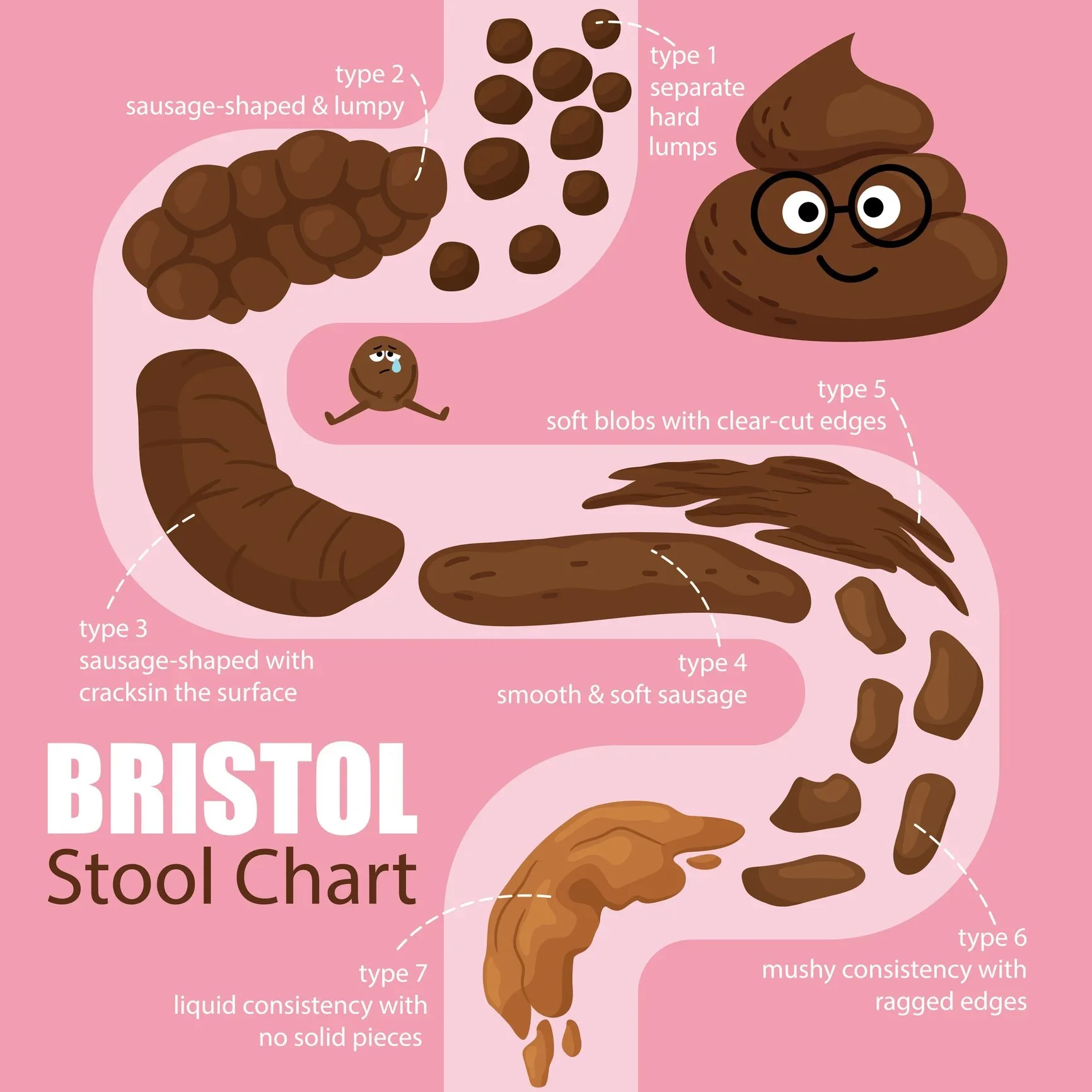
Image source: Jamaica Hospital Medical Center
This chart is useful to understand your baseline normal, recognise signs of constipation or diarrhoea and track changes from your intake and lifestyle. In an ideal world, your poo should be a type three or four – which are considered healthy. You should be able to pass it without urgency, pain or straining. It should be brown and you should feel completely empty afterwards.
If it’s a type one or two, it indicates constipation. Types five to seven show diarrhoea, rapid transit or urgency. And if this is happening to you, you definitely already knew that.
What do poo colour changes mean?
If you’ve never looked up a stool colour chart, now’s the time. Poop can come in a range of colours for a range of reasons – some linked to what we're eating, others potentially signalling something else is going on.
Brown stool is generally considered healthy, while green can be linked to diet or rapid transit. Black or red stool can sometimes indicate bleeding and should be medically assessed.
If there’s been a change, monitor closely and take action. Otherwise, this rainbow can be a useful tool to identify what colour changes may mean and when to act if there hasn’t been a dietary input to cause it.

Image source: Cleveland Clinic
How long should I be spending on the toilet?
Studies suggest most people spend longer scrolling on the toilet than actually having a bowel movement. You may be surprised to know that a bowel movement – without the phone – ideally shouldn’t take longer than around five minutes.
Sitting and straining for longer can contribute to haemorrhoids and pelvic floor problems. If it’s consistently taking a long time, pelvic floor physiotherapists are experts in teaching us how to poo properly – a basic skill parents and schools rarely teach.
Some healthy toilet habits are to not ignore the urge to go and try avoiding scrolling on your phone while sitting on the toilet. Your bowels need your undivided attention.
What impacts how often I go?
There are many factors. Diet and fibre have a big impact on your bowels, with low fibre intake being one of the biggest contributors to constipation and irregular bowel habits. Staying hydrated is more important than people realise, as dehydration can harden stools and slow down your bowel transit. Caffeine, movement and exercise usually stimulate bowel activity.
Stress and anxiety can impact your bowel frequency in both directions, either contributing to constipation or diarrhoea. Medications like opioids, iron supplements and some antidepressants usually impact bowel habits and can cause constipation.
When do I see a doctor?
Any change in bowel habits that is new, persistent or unexplained shouldn’t be ignored. Common warning signs to look out for and see a doctor about include:
Blood in stool or black stool
Pencil-thin stool
Persistent diarrhoea or constipation
Unintentional weight loss
Severe pain
Ongoing bloating
Feeling unable to fully empty
Sudden major changes in frequency
Across clinicians and bowel health organisations, one message is consistent: changes matter more than numbers. Your bowel habits are one of the body’s clearest health signals – awkward to talk about, but important not to ignore.